Bible
Stay in God’s Word each day!Ways to study the Bible
Rather than offering a single required reading plan, we’ve provided several approaches below to help you design a quiet time that fits your life and schedule. As you follow along in the books Ben is preaching from, feel free to use any of these suggestions as a guide for your own personal study.
One Chapter a Day
Read one chapter per day from the current preaching book. If you miss a day, simply begin again the next day. Consistency over time matters more than perfection.
The S.O.A.P. Method
This method helps slow you down and engage deeply with the text.
S—Scripture
Write a key verse or passage that stands out.
O—Observation
What is happening? What does this teach about God?
A—Application
How does this apply to your life today?
P—Prayer
Respond to God in prayer based on what you’ve read.
Reflective Questions
You may also use the following questions as you read:
- What do these verses say about God?
- What do these verses say about man?
- How can I apply these verses to my life today?
- Is there a sin to avoid?
- Is there a command to obey?
- Is there a lesson to learn?
- Is there a promise to claim?
The Inductive Method
This is a process by which you make observations of a passage and draw conclusions from those observations.
- Who (Who is speaking? Who is the intended audience? Who is present in the moment?)
- What (What is this passage about? What problem is this addressing? What is happening? What is being said? What commands need to be obeyed?)
- When (When is this event taking place?)
- Where (Where is this event taking place? Where does it fit in the larger context of the book and Scripture as a whole?)
- Why (Why is this messaged needed? Why is it relevant today?)
- How (How does this message change what I know about God and humanity? How do I apply this to my life so that I can live more faithfully as a follower of Jesus?)
Ben’s 2026 Teaching Plan
Winter (10 Weeks): Hebrews
Easter (3 Weeks): Mark
Spring (10 weeks): Ezra, Nehemiah, and Esther
Summer (9 weeks): James and Jude
Fall (17 Weeks): Judges, 1 Samuel, and 2 Samuel
Christmas (4 Weeks): Christmas Series
As we dive deeper into Scripture, our goal is simple: Spend time with the Lord in His Word alongside what Ben is teaching each week.
Resources
Dr. Howard Hendricks’ four Bible study steps
Biblia—Online Bible Study Tools
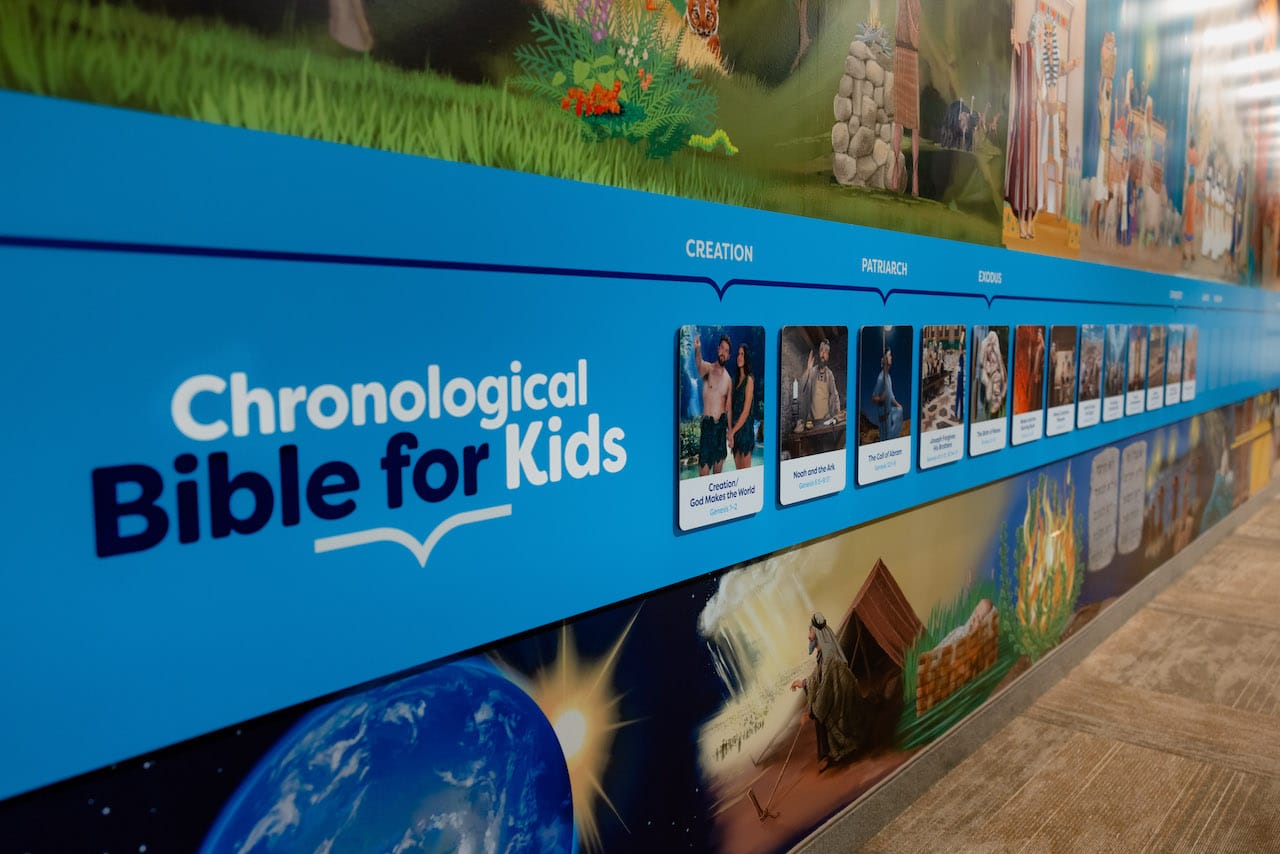
Check out our timeline wall
Venture over to the East Lobby and take in the Chronological Bible for Kids mural which depicts each stage of God’s story in both the Old and New Testaments.